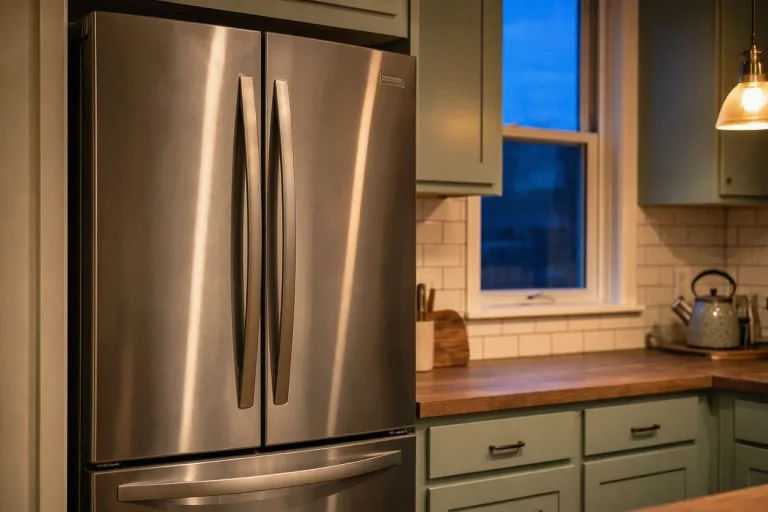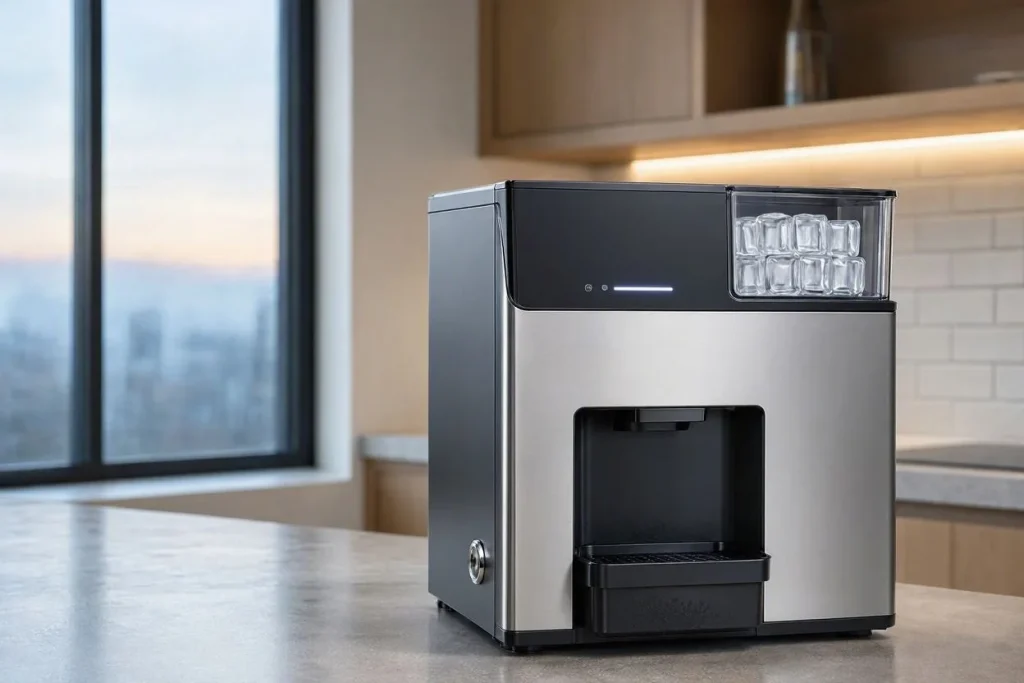
Refrigeration calls arrive in a wave. Woodland Hills spends four days above 100 degrees, the west end of the Valley running several degrees hotter than Studio City on the same afternoon, and by the second day the phones reflect it. Kitchen units mostly cope. What gives out first is the equipment in unconditioned space: the second refrigerator in the garage, the undercounter drawers in an outdoor kitchen, the wine cabinet in a converted pantry with no air moving through it.
Heat has to go somewhere, and a closed garage gives it nowhere
A refrigerator makes cold by moving heat out of the box and releasing it into the room through the condenser. That transfer depends on the room being meaningfully cooler than the coil. In a 72-degree kitchen it is effortless. In an Encino garage shut since morning and reading 115 by four in the afternoon, the margin has nearly disappeared, so the compressor stops cycling and simply runs. Manufacturers publish a maximum ambient temperature for every model, and a standard unit asked to work well above it is not defective. It is out of its element. Garage-rated models exist for exactly this reason, and if a second refrigerator has died twice in three summers, that specification is worth reading before another one is bought.
What gives way under those conditions is predictable. Start relays go first, which is what a repeating click every few minutes means. Condenser fan motors follow. Compressors are last and most expensive, and they are usually the end of a chain that began with a coil nobody had cleaned.
Dust is not a detail here
Santa Ana conditions drive dry air and fine grit through every opening in a house, and wildfire seasons add to the load. A coil needing attention once a year elsewhere gets packed here, and a packed coil cannot release heat no matter how hard the fan works. On a good number of summer calls, cleaning that coil properly and then metering what the compressor draws is most of the job.
Four checks worth making before you book
- Look at the coil. Pull the base grille or the rear panel and see whether you are looking at metal fins or a felt of dust and pet hair. A vacuum with a brush attachment, twice a year in this climate, is the most valuable half hour an owner can spend.
- Give the cabinet room. Boxes stacked against the sides of a garage unit, a bicycle leaning on the back, a vent grille blocked by cabinetry built tight around a built-in: all of it traps the heat the machine just shed. A few inches of clear air is a mechanical improvement, not a cosmetic one.
- Test the door. Close a strip of paper in the gasket and pull. If it slides out with no resistance, the seal is admitting warm air continuously, and in August that alone can keep a compressor running around the clock.
- Measure both compartments. Leave a thermometer in a glass of water on a middle shelf overnight and read the freezer separately. A freezer holding zero while the fresh-food side sits at 50 is an air-movement problem between the two compartments rather than a dead compressor, and saying so on the phone changes which parts ride out on the van.
Outdoor and undercounter equipment
Outdoor kitchens are common at the top of Encino, through Calabasas and along the hillside streets above Ventura Boulevard, and two installation issues account for most of the trouble out there. An indoor-rated undercounter unit put outdoors will not survive a Valley summer; outdoor-rated equipment uses a different condenser and different sealing. And these units vent forward through a narrow grille at floor level, exactly where leaves and decomposed granite collect. Keep it clear, keep afternoon sun off the doors where you can, and expect to service it more often than an indoor machine.
The September pattern
Late-season heat brings sags and outages, and a machine that was fine at dinner and dark the next morning has usually lost a control board or a relay rather than anything mechanical. Worth having looked at before you price new units, since it is frequently one part and a couple of hours.
Call (818) 000-0000 early in the day during a heat wave. Refrigeration moves up the schedule, and the morning holds the widest choice of slots. Universal Appliance Repair works out of Sherman Oaks and covers the Valley and the Westside on a seven-day schedule, 7:00 AM to 7:00 PM, with technicians who are EPA Section 608 certified for sealed-system refrigerant work and manufacturer-trained on the brands they service.